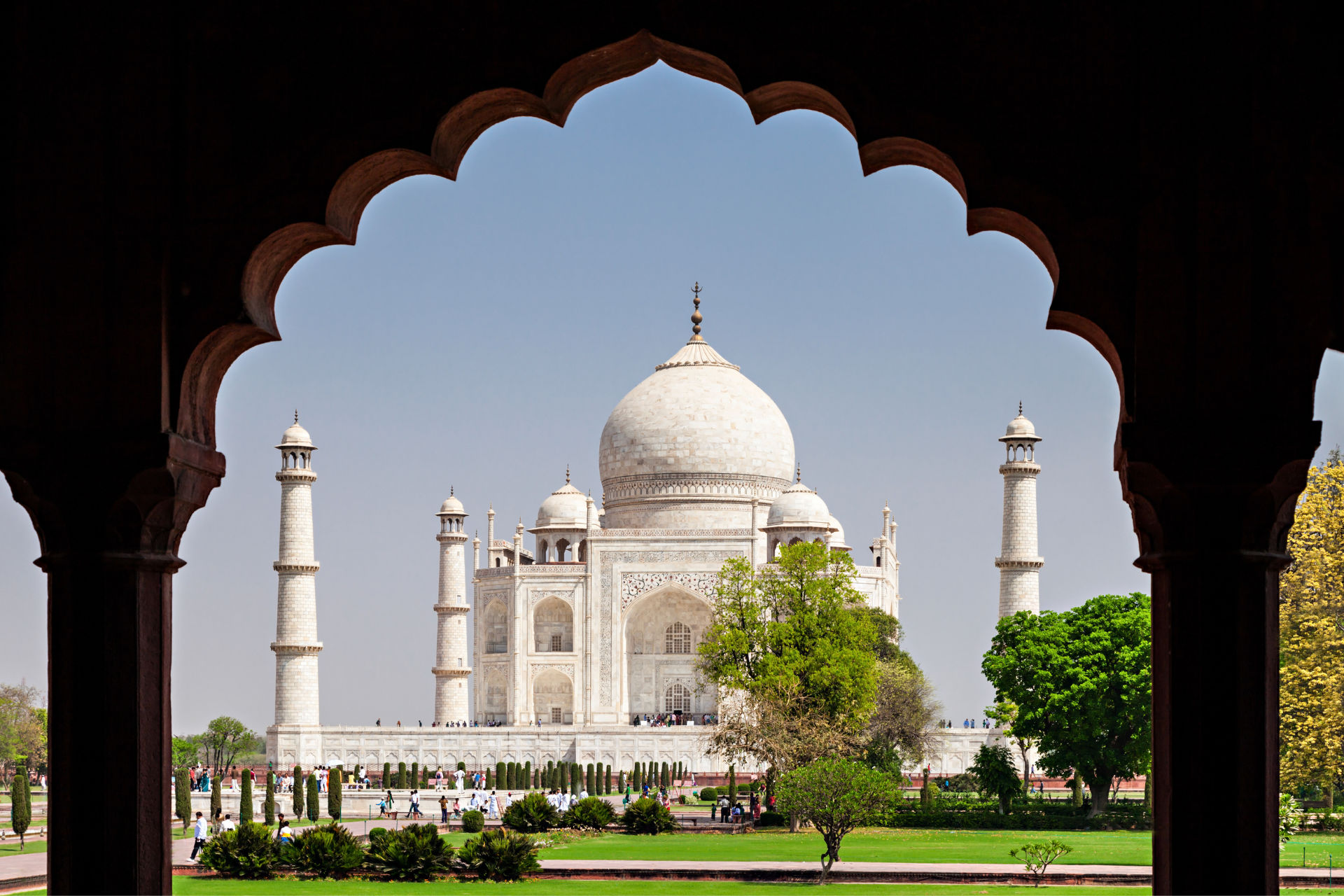
A timeless Mughal masterpiece and one of the Seven Wonders of the World.
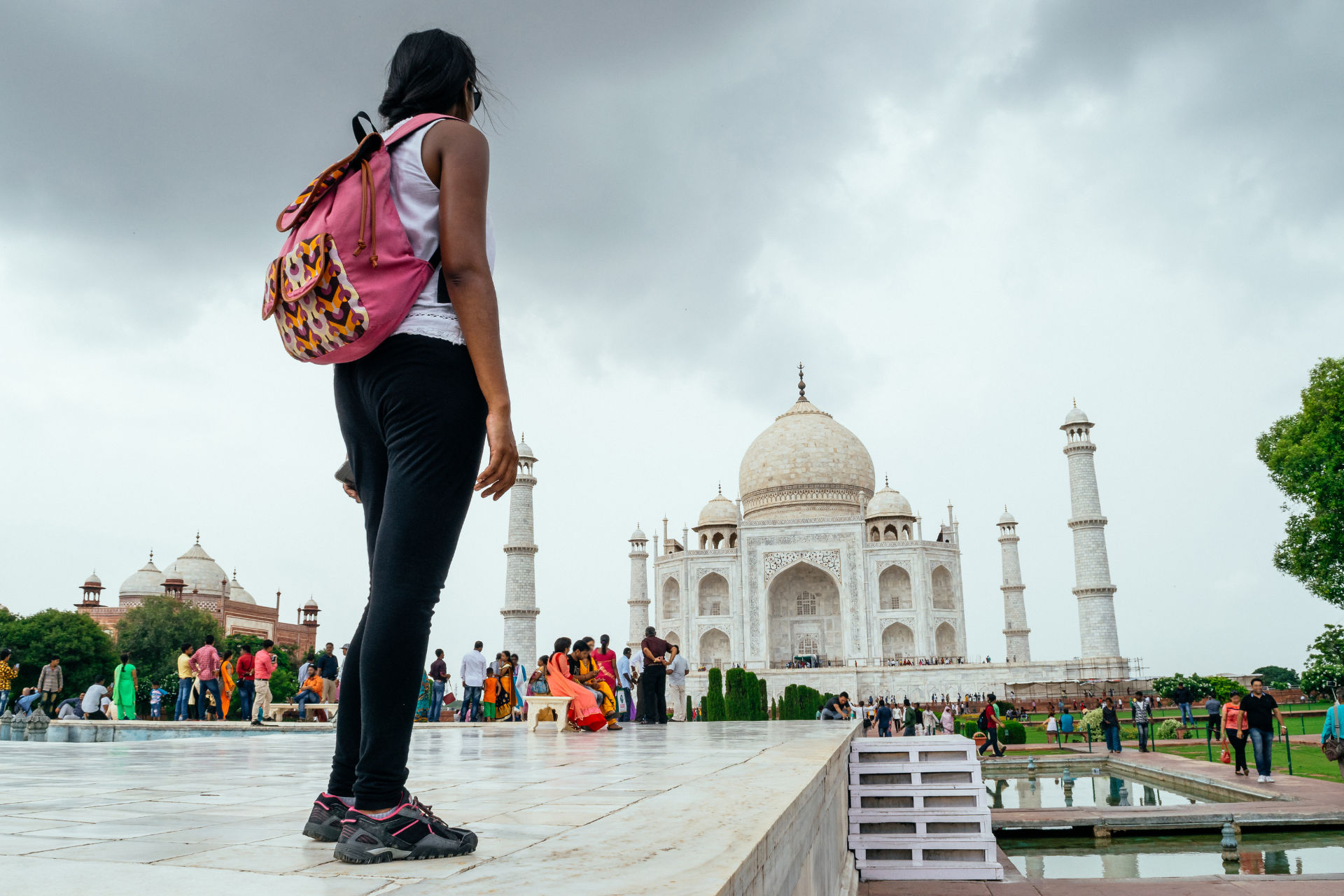
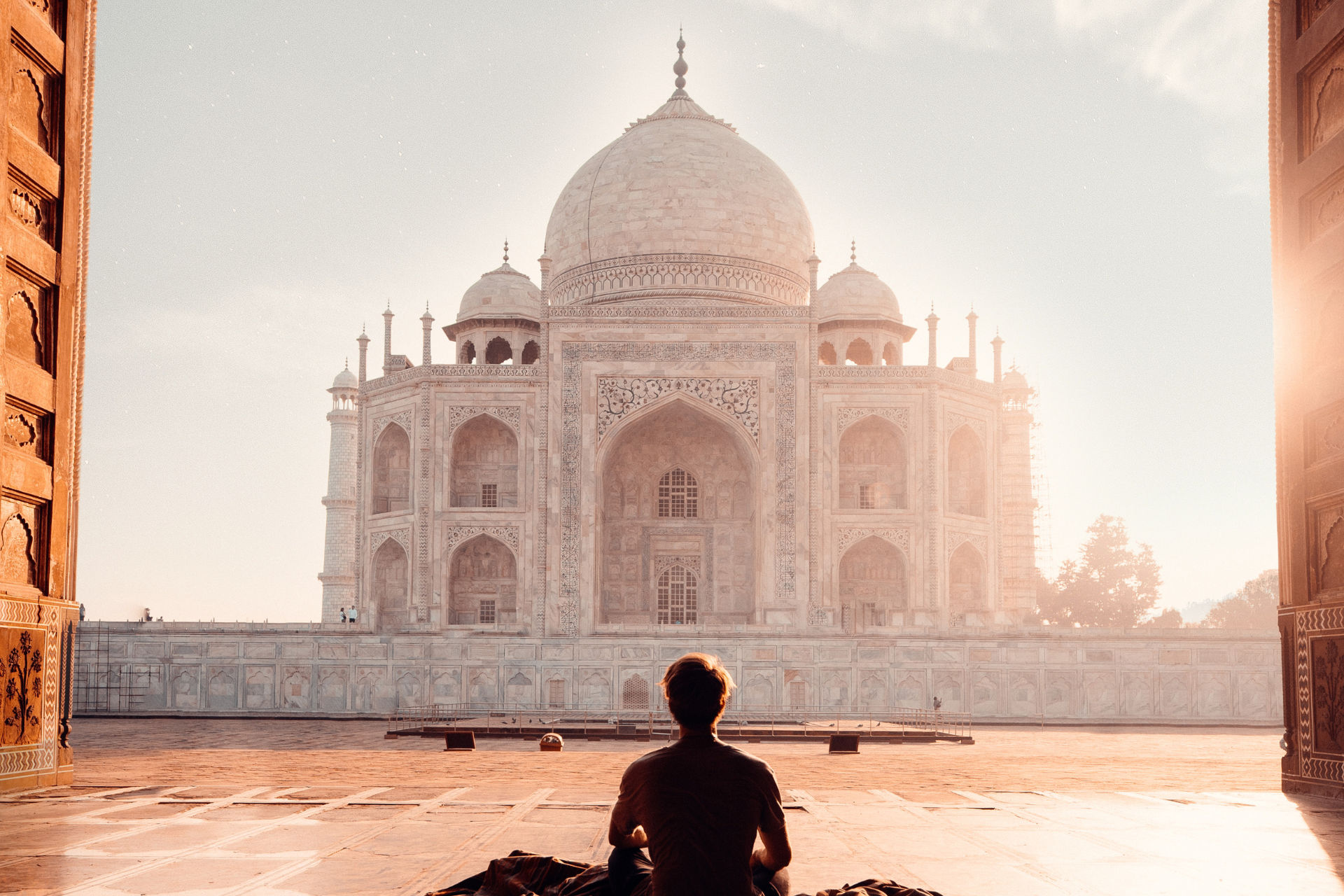
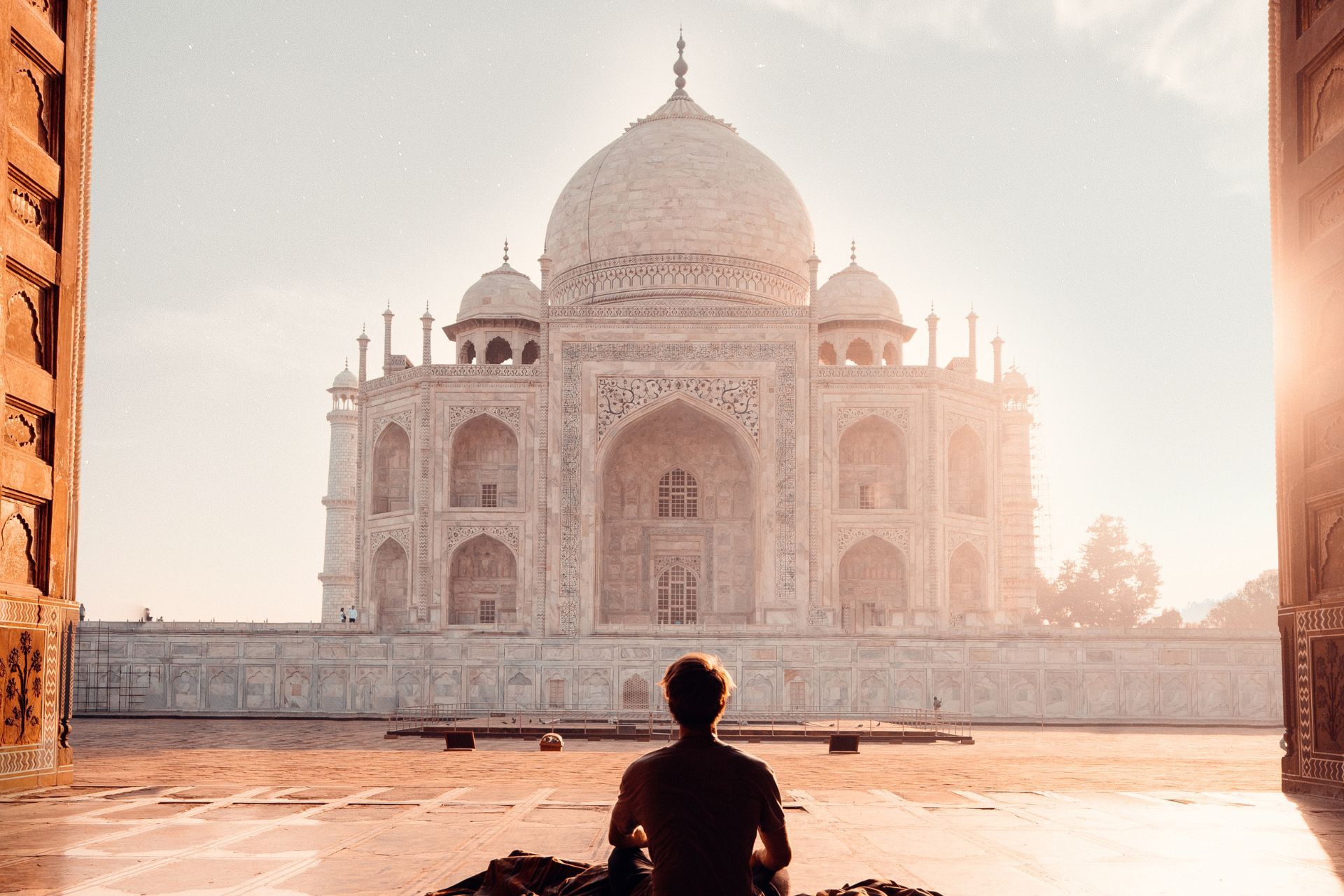
The Taj Mahal, located on the banks of the Yamuna River in Agra, Uttar Pradesh, is India’s most iconic monument and a UNESCO World Heritage Site. Commissioned in 1632 by Mughal Emperor Shah Jahan, it was built as a mausoleum for his beloved wife Mumtaz Mahal, who died during childbirth. Completed in 1648 (with surrounding structures and gardens finished by 1653), the Taj Mahal is celebrated as the ultimate symbol of love and devotion.
Constructed from gleaming white marble, the monument is adorned with intricate inlay work of semi-precious stones, calligraphy, and floral motifs. Its design harmoniously blends Persian, Islamic, and Indian architectural styles, with the central dome rising to nearly 73 meters and flanked by four elegant minarets. The Taj Mahal’s beauty is enhanced by its symmetrical gardens and reflecting pools, which create a mesmerizing effect at sunrise, sunset, and under the moonlight. Drawing over 8 million visitors annually, it remains one of the most admired and photographed monuments in the world.
Early morning hours are recommended, as temperatures are cooler and crowds fewer. Certain areas may temporarily restrict access during prayer times.
There is no mandatory ticketing system at the temple. Entry charges shown are indicative only and used for representation purposes.
Best Months: November – March
Best Time of Day: Morning hours
Seasonal & weather details:

The Taj Mahal is located in Agra, about 200 km from Delhi. It is easily accessible by train, bus, or car. The fastest option is the Gatiman Express train from Delhi to Agra, taking less than two hours. Within Agra, auto-rickshaws, taxis, and battery-operated vehicles are available to reach the monument. The nearest airport is Agra Airport, though most visitors arrive via Delhi’s Indira Gandhi International Airport.

Visitors must pass through security checks, and large bags are not allowed inside. Photography is permitted in most areas but restricted inside the main mausoleum. Food, tobacco, and mobile phone use inside the mausoleum are prohibited. Respectful attire is recommended, and silence should be maintained within the central chamber.

Plan your visit early in the morning or late afternoon to avoid crowds and enjoy the changing hues of the marble. Carry water, sunscreen, and a hat during summer months. Beware of touts and unauthorized guides—always hire licensed guides for authentic information. Keep valuables secure, and follow instructions from security staff for a smooth experience.
Enter your email to receive a reset link